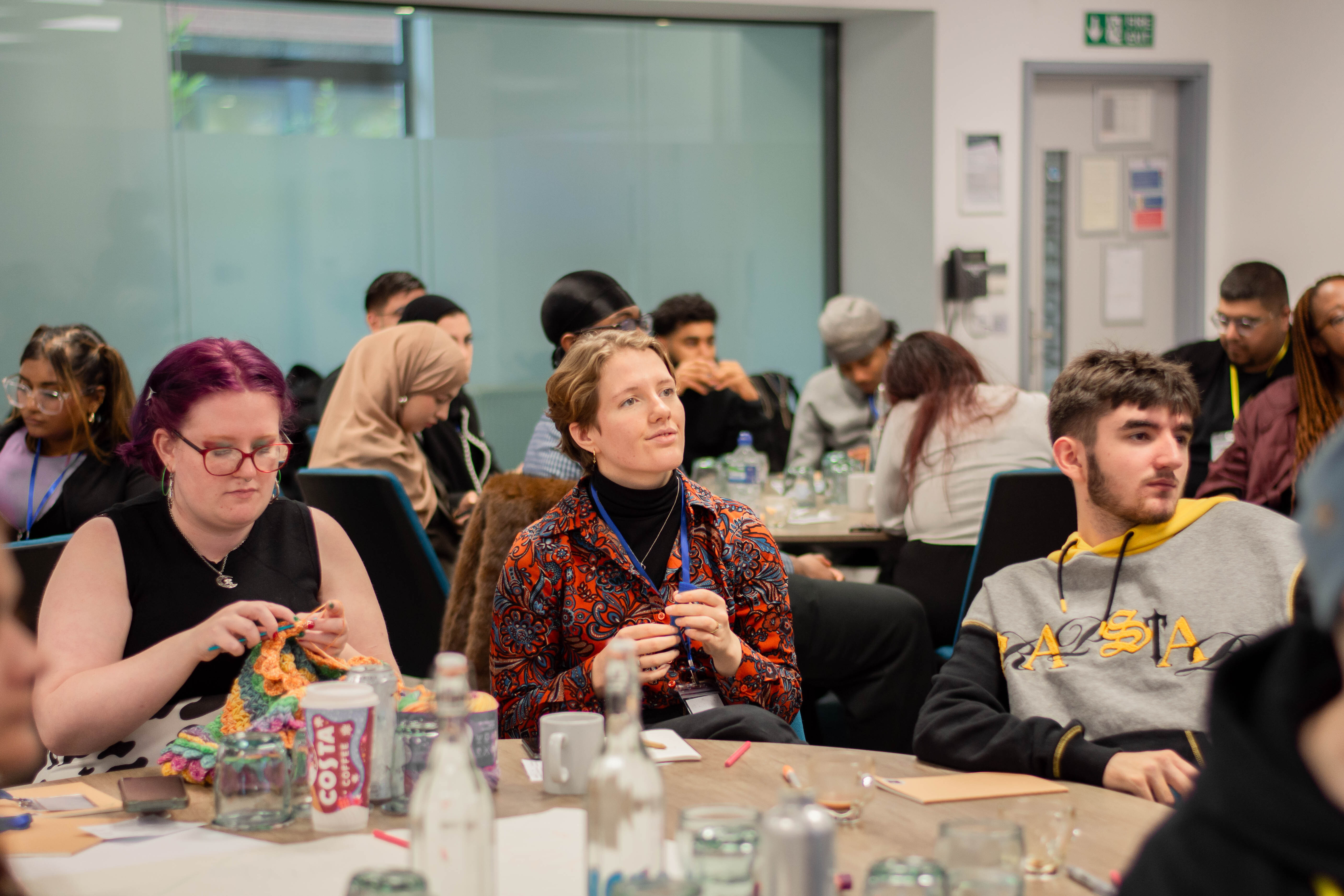
“We’re starting to see tangible impact,” Isabelle says. Partners like Missing People have changed the language they use after training with them. Creative workshops have given young people new ways to connect and feel safe. Isabelle describes the shift as immediate and tangible. “When you see another organisation change its practice in the language they use when talking to care-experienced young people, that’s massive. I know those young people are feeling valued because they’re being spoken to in a way that they want to be spoken to, not just in language used in a policy document. It’s tangible. It’s real. And we see the impact immediately.”
Despite all of their progress, barriers still remain. “Our lived experience is our strength, but it is a challenge,” Isabelle says. “This work is personal, which can be draining. Financial insecurity is constant. Local authorities often ignore our emails because they don’t want to be challenged. The system itself is a barrier.” Capacity is another struggle. “There’s so much that needs to be done, and we’re a small team. We can’t do it all.”
She’s also frustrated by how funding flows. “Care experience is a hot topic right now because of the government’s Care Review, but the money often goes to big, established organisations, which can feel performative.”
This funding approach also reinforces the exact issue that the Care Experience Movement was founded to dismantle. “It kind of goes back to that feeling when you're care-experienced, that you're listened to, but only in a certain way or a certain space.”
Her message to funders who want to support the care-experienced sector is this:
“Trust the people doing the work. They know what they’re doing. And if they don’t, they’ll ask for help. Funders need to be open and ready to support beyond just giving money too. That’s the big thing: don’t just throw funding at an organisation and hope for the best. From a care-experienced perspective, listen to the people living it. Pay attention to the work they’re drawn to, and the change they want to make. And finally, trust that care-experienced people come to this work for a reason.”